


Hey there! As a hand cart supplier, I often get asked how to choose the right wheel size for a hand cart. It's not as straightforward as it might seem, and there are quite a few factors to consider. So, let's dive into this topic and figure out how you can make the best decision for your needs.
Understanding the Basics of Wheel Sizes
First off, let's talk about the basics. Wheel sizes for hand carts are usually measured in inches. This measurement refers to the diameter of the wheel. Smaller wheels are typically in the range of 2 to 4 inches, medium-sized ones are around 5 to 8 inches, and larger wheels can be 9 inches or more.
The size of the wheel can have a big impact on how the hand cart performs. For instance, smaller wheels are more maneuverable and are great for tight spaces. They're also lighter, which can make the hand cart easier to lift and carry. On the other hand, larger wheels can roll over obstacles more easily and are better for rough terrain.
Factors to Consider When Choosing Wheel Size
1. Load Capacity
One of the most important factors to consider is the load capacity of your hand cart. If you're going to be carrying heavy loads, you'll need larger wheels. Larger wheels can distribute the weight more evenly, which reduces the stress on the wheels and the cart itself. For heavy loads, I'd recommend wheels that are at least 8 inches in diameter. For example, our Heavy Duty Tank Hand Trolley is designed to handle large and heavy items, and it comes with appropriately sized wheels to ensure smooth operation.
On the flip side, if you're only carrying light loads, smaller wheels can do the trick. They're more cost - effective and can make the hand cart more portable. Our Light Duty Hand Trolley is a great option for light - weight items, and its smaller wheels make it easy to navigate in small areas.
2. Terrain
The type of terrain where you'll be using the hand cart is another crucial factor. If you're working on a smooth, flat surface like a warehouse floor or a paved driveway, smaller wheels will work just fine. They can move quickly and easily on these surfaces.

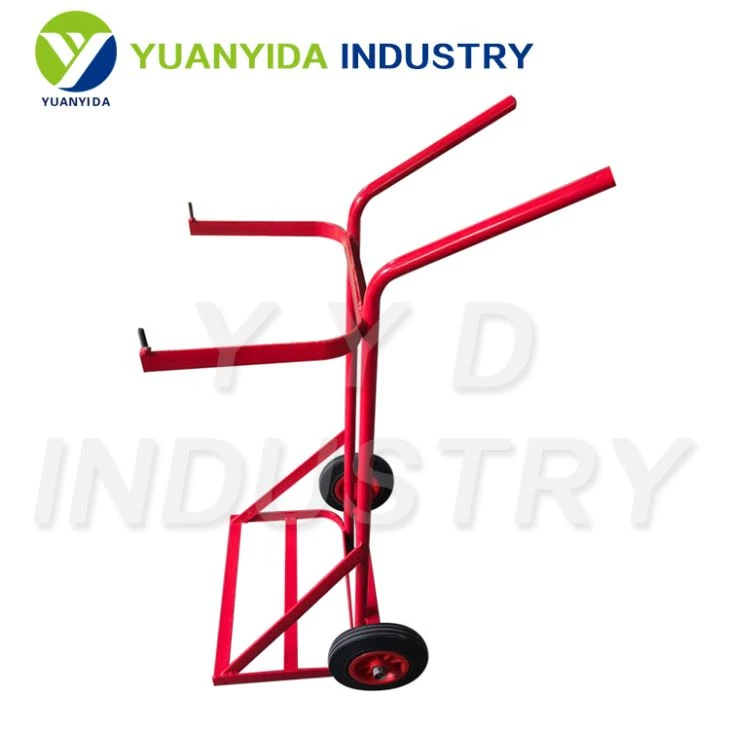
However, if you need to use the hand cart on rough or uneven terrain, like gravel paths or grassy fields, larger wheels are a must. Larger wheels can roll over bumps and obstacles without getting stuck. For example, if you're using a hand cart to transport items in a garden or a construction site, larger wheels will provide better stability and mobility. Our Light Duty Tank Hand Trolley can be customized with larger wheels for those who need to use it on less - than - perfect surfaces.
3. Maneuverability
Maneuverability is also an important consideration. If you need to navigate through narrow aisles or tight corners, smaller wheels are your best bet. They can turn more easily and require less space to make a U - turn. This is especially important in places like retail stores or small workshops.
But if you're moving the hand cart in open spaces and don't need a lot of sharp turns, larger wheels won't be a problem. In fact, they can provide a more stable and efficient movement in open areas.
4. Storage and Portability
Think about how you'll be storing and transporting the hand cart. Smaller - wheeled hand carts are generally more compact and easier to store. They can fit into small closets or under shelves. They're also lighter, which makes them easier to carry around if you need to move them from one place to another.
Larger - wheeled hand carts take up more space and can be heavier. However, if you have enough storage space and don't mind the extra weight, the benefits they offer in terms of load capacity and terrain handling might outweigh the storage and portability issues.
Matching Wheel Size to Hand Cart Types
1. Platform Carts
Platform carts are used for carrying a variety of items, from boxes in a warehouse to equipment at a trade show. For light - to - medium - load platform carts used on smooth surfaces, 5 - to 8 - inch wheels are a good choice. They offer a balance between maneuverability and load - handling capacity.
For heavy - duty platform carts that need to carry large and heavy loads, 8 - inch or larger wheels are recommended. These wheels can handle the weight and provide a stable base for the cart.
2. Dolly Carts
Dolly carts are often used for moving single, bulky items like furniture. If you're using a dolly cart on a smooth floor, 4 - to 6 - inch wheels can work well. They allow for easy maneuvering and can handle the weight of most furniture items.
But if you need to move the dolly cart outside or on uneven surfaces, larger wheels, say 8 inches or more, will be more suitable.
3. Tank Carts
Tank carts are used for transporting liquids in tanks. The wheel size for tank carts depends on the size and weight of the tank. For light - duty tank carts, 4 - to 6 - inch wheels can be sufficient. Our Light Duty Tank Hand Trolley is a great example of this.
For heavy - duty tank carts, larger wheels, 8 inches or above, are necessary to support the weight of the full tank and ensure safe and easy transportation. That's why our Heavy Duty Tank Hand Trolley has appropriately sized wheels.
Summary
In conclusion, choosing the right wheel size for a hand cart involves considering several factors, including load capacity, terrain, maneuverability, and storage. By carefully weighing these factors, you can select the wheel size that will make your hand cart work most effectively for your specific needs.
If you're still not sure which wheel size is right for your hand cart, or if you're interested in purchasing a hand cart from our range, feel free to reach out. We're here to help you make the best choice for your business or personal needs. Start a conversation with us to discuss your requirements and get the perfect hand cart for you.
References
- General knowledge and experience in the hand cart industry.
- Industry standards and best practices for hand cart design and use.


