Measuring for a portable fence is a crucial step in ensuring that you get the right product for your specific needs. As a portable fence supplier, I've encountered numerous customers who face challenges in accurately measuring for their fences. In this blog, I'll guide you through the process of measuring for a portable fence, covering everything from understanding your requirements to taking precise measurements.

Understanding Your Needs
Before you start measuring, it's essential to have a clear understanding of why you need a portable fence. Different applications may require different types of fences. For instance, if you're looking to control crowds at an event, you might need a Crowd Control Barrier with Flat Plate Base. These barriers are designed to be sturdy and easy to set up, making them ideal for managing large groups of people.

On the other hand, if you're working on a construction site, a Temporary Construction Site Side Fence would be more appropriate. These fences are built to withstand the rigors of a construction environment and provide a safe boundary around the work area.
For public areas where crowd control is needed, a Public Area Crowd Control Barrier is a great choice. They are often designed to be aesthetically pleasing while still providing effective crowd management.
Site Assessment
Once you've determined the type of portable fence you need, the next step is to assess the site where the fence will be installed. Here are some key factors to consider:
Terrain
The terrain of the site plays a significant role in measuring for a portable fence. If the ground is uneven, you'll need to account for the variations in height. For example, if you're installing a fence on a sloped surface, you'll need to measure the length along the slope and also consider the vertical drop. This will ensure that the fence fits properly and provides adequate protection.
Obstacles
Take note of any obstacles on the site, such as trees, rocks, or existing structures. These obstacles may affect the placement and length of the fence. You'll need to measure around them and make sure that the fence can be installed without being obstructed.
Access Points
Identify the access points that you'll need to maintain, such as gates or entrances. Measure the width of these access points accurately to ensure that the fence can be installed with appropriate openings.
Taking Measurements
Now that you've assessed the site, it's time to take the actual measurements. Here's a step-by-step guide:
Length
Measure the total length of the area where you want to install the fence. Use a measuring tape or a laser distance measurer for accuracy. If the area is irregularly shaped, break it down into smaller, more manageable sections and measure each section separately. Then, add up the lengths of all the sections to get the total length.
Height
Determine the appropriate height for your fence based on its intended use. For crowd control barriers, a standard height of around 3 to 4 feet is usually sufficient. However, for construction site fences, you may need a taller fence, typically around 6 feet or more, to provide adequate security. Measure the height from the ground to the desired top of the fence.
Spacing
If you're using multiple fence panels, you'll need to decide on the spacing between them. This will depend on the type of fence and its purpose. For example, if you're using a chain-link fence for crowd control, you may want to leave a small gap between the panels to allow for some flexibility. Measure the width of each panel and calculate the number of panels needed based on the total length and the desired spacing.
Account for Expansion and Contraction
It's important to account for expansion and contraction of the fence materials due to temperature changes. Different materials expand and contract at different rates, so make sure to leave some extra space when installing the fence. This will prevent the fence from warping or breaking during extreme weather conditions.
Double-Check Your Measurements
Once you've taken all the measurements, double-check them to ensure accuracy. A small error in measurement can lead to significant problems during the installation process. It's also a good idea to have someone else verify your measurements to catch any potential mistakes.
Consider Future Needs
When measuring for a portable fence, it's a good idea to consider any future needs or changes to the site. For example, if you anticipate expanding the area in the future, you may want to leave some extra space for additional fence panels. This will save you time and money in the long run.
Conclusion
Measuring for a portable fence is a detailed process that requires careful planning and attention to detail. By understanding your needs, assessing the site, taking accurate measurements, and accounting for future changes, you can ensure that you get the right fence for your project.
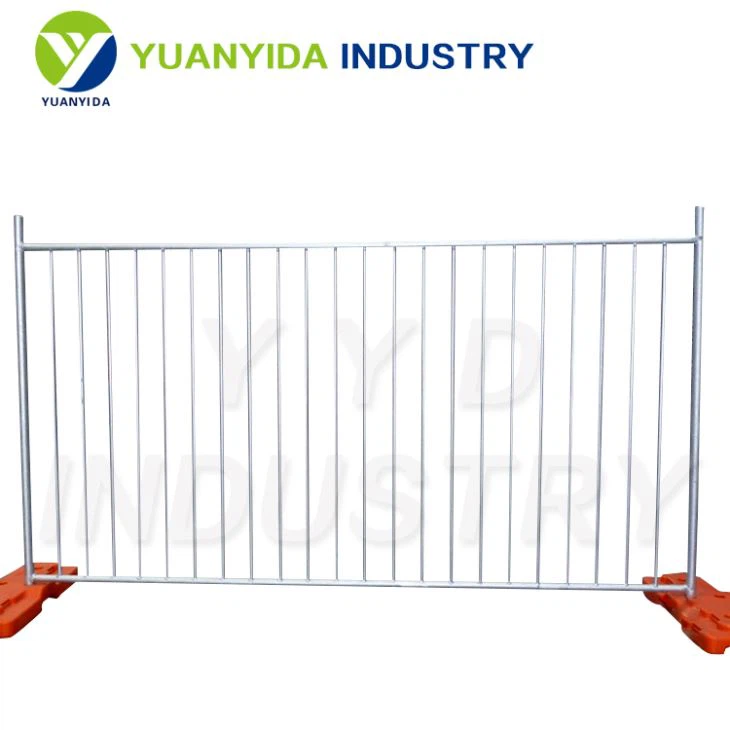
If you're interested in purchasing a portable fence or have any questions about the measuring process, please don't hesitate to contact us. Our team of experts is here to help you find the perfect solution for your needs.
References
- Construction Fence Installation Guide. [Publisher Name], [Year].
- Crowd Control Barrier Design and Usage. [Author Name], [Publication Date].
- Portable Fence Materials and Their Properties. [Research Institute], [Year].