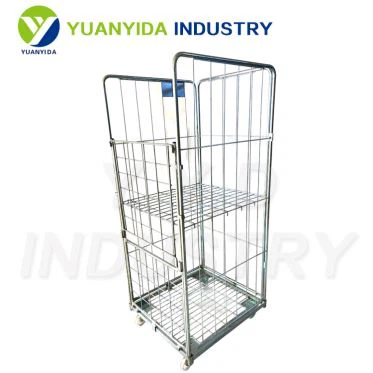
Heavy duty roll containers are indispensable tools in various industries, from logistics and warehousing to retail and hospitality. One common question that often arises is whether these robust containers can be stacked. As a leading supplier of heavy duty roll containers, I'm here to delve into this topic and provide you with comprehensive insights.
Understanding Heavy Duty Roll Containers
Heavy duty roll containers are designed to withstand substantial weight and frequent use. They typically feature a sturdy frame, often made of high - strength steel, and are equipped with wheels for easy mobility. These containers come in a variety of sizes and configurations, including the Super Jumbo Demountable Roll Pallet, which offers a large storage capacity and the flexibility of demountability.
The 4 Sided Laundry Roll Container is another popular option, specifically designed for handling laundry in commercial settings. Its four - sided structure provides excellent containment, preventing items from falling out during transportation. Similarly, the 4 Sided Roll Cage with PVC Cover offers protection from dust and debris, making it suitable for a wide range of applications.
Factors Affecting Stackability
The stackability of heavy duty roll containers depends on several key factors. Firstly, the design of the container plays a crucial role. Containers with a stable base and a well - engineered stacking mechanism are more likely to be stackable. For example, some roll containers are equipped with interlocking features that ensure a secure fit when stacked, preventing them from toppling over.
The weight capacity of the containers is also a significant factor. Each container has a specified maximum load capacity, and when stacking, it's essential to ensure that the combined weight of the stacked containers does not exceed the capacity of the bottom container. Overloading can lead to structural damage and pose a safety risk.
The condition of the containers is another consideration. Containers that are damaged or have worn - out components may not stack properly. Regular inspection and maintenance are necessary to ensure that the containers remain in good condition and are safe to stack.
Advantages of Stacking Heavy Duty Roll Containers
Stacking heavy duty roll containers offers several advantages. Firstly, it maximizes storage space. In warehouses and storage facilities where space is often at a premium, stacking containers vertically allows for more efficient use of available area. This can lead to significant cost savings by reducing the need for additional storage space.
Stacking also improves organization. By stacking containers, it becomes easier to categorize and access stored items. Containers can be stacked in an orderly manner, with similar items grouped together, making it quicker to locate and retrieve specific items when needed.
In addition, stacking can enhance the overall stability of the storage system. When containers are stacked properly, they form a more stable structure, reducing the risk of containers tipping over due to external forces such as vibrations or accidental impacts.
Challenges of Stacking
Despite the advantages, there are also some challenges associated with stacking heavy duty roll containers. One of the main challenges is ensuring proper alignment. If the containers are not stacked correctly, they may not be stable, increasing the risk of collapse. This requires careful handling and attention to detail during the stacking process.
Another challenge is the weight distribution. Uneven weight distribution within the stacked containers can cause instability. It's important to distribute the weight evenly to ensure that the load is balanced and the containers remain stable.
The height of the stack is also a consideration. Stacking containers too high can increase the risk of toppling, especially if the containers are not properly secured. Local safety regulations may also limit the maximum height of stacked containers to ensure safety.
Stacking Guidelines
To ensure safe and effective stacking of heavy duty roll containers, the following guidelines should be followed:


- Check the Manufacturer's Recommendations: Always refer to the manufacturer's instructions regarding stackability and weight limits. These guidelines are based on the container's design and engineering specifications and should be strictly adhered to.
- Inspect the Containers: Before stacking, thoroughly inspect each container for any signs of damage or wear. Damaged containers should not be stacked as they may compromise the stability of the stack.
- Align the Containers Properly: Ensure that the containers are aligned correctly when stacking. This may involve using alignment guides or markings on the containers to ensure a proper fit.
- Distribute the Weight Evenly: Place heavier items at the bottom of the stack and distribute the weight evenly across the containers. This helps to maintain stability and prevent the stack from toppling.
- Secure the Stack: Use appropriate securing methods, such as straps or locks, to prevent the containers from shifting or separating during storage or transportation.
Conclusion
In conclusion, heavy duty roll containers can be stacked, but it requires careful consideration of various factors such as design, weight capacity, and condition. When stacked properly, these containers offer significant benefits in terms of space utilization, organization, and stability. As a supplier of heavy duty roll containers, we are committed to providing high - quality products that meet the needs of our customers.
If you are interested in purchasing heavy duty roll containers or have any questions about their stackability, please feel free to contact us for a detailed discussion. Our team of experts is ready to assist you in finding the right solution for your specific requirements.
References
- Industry standards and guidelines for heavy duty roll containers.
- Manufacturer's specifications and documentation for heavy duty roll containers.