


Are there weight limits for customized casters?
As a supplier of customized casters, I often get asked about weight limits. It's a crucial question because the weight capacity of a caster directly impacts its performance, durability, and safety in various applications. In this blog post, I'll delve into the topic of weight limits for customized casters, exploring the factors that influence them and providing insights to help you make informed decisions.
Understanding Weight Limits
Weight limits for casters refer to the maximum amount of weight that a caster can safely support. This limit is determined by several factors, including the caster's design, materials, and intended use. Exceeding the weight limit can lead to premature wear and tear, reduced mobility, and even safety hazards.
Factors Influencing Weight Limits
Caster Material
The material used to manufacture the caster plays a significant role in determining its weight capacity. Different materials have varying strength and durability properties. For example, steel casters are known for their high strength and can typically support heavier loads compared to plastic or rubber casters.
- Steel Casters: Steel is a robust material that can withstand heavy loads and is often used in industrial applications where high weight capacities are required.
- Plastic Casters: Plastic casters, such as 125mm PP Caster, are lightweight and cost - effective. They are suitable for lighter loads and applications where corrosion resistance is important, such as in cleanroom environments.
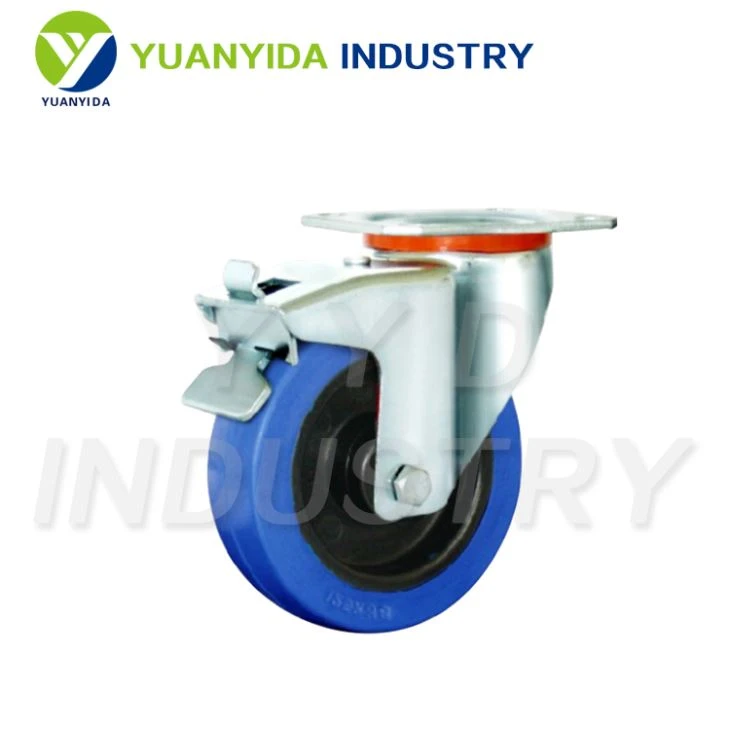
- Rubber Casters: Rubber casters, like 125mm Rubber Caster, offer good shock absorption and traction. However, their weight capacity is generally lower than that of steel casters and is more suitable for medium - light loads.
- PU Casters: Polyurethane (PU) casters, such as 125mm PU Caster, combine the advantages of both rubber and plastic. They have good wear resistance, load - bearing capacity, and are often used in applications where a balance between load capacity and floor protection is needed.
Caster Design
The design of the caster also affects its weight limit. Factors such as the size of the wheel, the type of bearing, and the construction of the caster frame all play a role.
- Wheel Size: Larger wheels generally have a higher weight capacity than smaller wheels. This is because a larger wheel distributes the load over a larger area, reducing the pressure on the wheel and the floor.
- Bearing Type: The type of bearing used in the caster can significantly impact its weight capacity and performance. Precision ball bearings can handle higher loads and provide smoother movement compared to plain bearings.
- Caster Frame: A well - designed and sturdy caster frame is essential for supporting heavy loads. Frames made from thick, high - quality materials can better withstand the forces exerted by the load.
Application Environment
The environment in which the caster will be used also influences its weight limit. Factors such as floor conditions, temperature, and frequency of use can all affect the caster's performance.
- Floor Conditions: Uneven or rough floors can increase the stress on the caster, reducing its effective weight capacity. For example, if the caster is used on a gravel or cobblestone surface, it may not be able to support as much weight as it would on a smooth, flat floor.
- Temperature: Extreme temperatures can affect the properties of the caster materials. For instance, high temperatures can cause plastic casters to become soft and lose their shape, reducing their weight capacity.
- Frequency of Use: If the caster is used frequently or under heavy - duty conditions, its weight capacity may need to be adjusted accordingly. A caster that is used intermittently may be able to support a higher load than one that is in constant use.
Determining the Right Weight Limit for Your Application
When selecting a customized caster, it's important to accurately determine the weight limit required for your specific application. Here are some steps to help you make the right choice:
Calculate the Total Load
First, calculate the total weight that the caster will need to support. This includes the weight of the equipment or object being moved, as well as any additional loads such as people or materials.
Consider the Number of Casters
The number of casters used on a piece of equipment also affects the weight distribution. Divide the total load by the number of casters to determine the average load per caster. However, it's important to note that in real - world applications, the load may not be evenly distributed among the casters.
Factor in Safety Margins
It's always a good idea to add a safety margin to the calculated weight limit. This provides a buffer in case of unexpected loads or variations in operating conditions. A common safety margin is around 20 - 30%.
Importance of Adhering to Weight Limits
Adhering to the weight limits of customized casters is crucial for several reasons:
Safety
Exceeding the weight limit can pose a significant safety risk. It can cause the caster to fail, leading to equipment damage, product spills, and even personal injury.
Durability
Staying within the weight limit helps to ensure the longevity of the caster. Overloading the caster can cause premature wear and tear, reducing its lifespan and increasing the need for frequent replacements.
Performance
Casters that are used within their weight limits will perform better. They will roll more smoothly, require less effort to move, and provide better stability.
Customization for Specific Weight Requirements
As a supplier of customized casters, we understand that every application has unique weight requirements. That's why we offer a wide range of customization options to meet your specific needs. Whether you need a caster with a higher weight capacity for an industrial application or a lightweight caster for a delicate piece of equipment, we can work with you to design and manufacture the perfect solution.
We have a team of experienced engineers who can analyze your requirements and recommend the most suitable caster materials, designs, and configurations. We use state - of - the - art manufacturing processes to ensure that our customized casters meet the highest quality standards.
Conclusion
In conclusion, there are indeed weight limits for customized casters, and these limits are determined by a variety of factors including caster material, design, and application environment. It's essential to accurately calculate the weight requirements for your application and select a caster that can safely support the load. By adhering to the weight limits, you can ensure the safety, durability, and performance of your equipment.
If you're in need of customized casters and have questions about weight limits or any other aspect of caster selection, don't hesitate to contact us. Our team of experts is ready to assist you in finding the perfect caster solution for your specific needs. Let's work together to ensure that your equipment moves smoothly and safely.

References
- "Caster and Wheel Handbook" by Hamilton Caster & Mfg. Co.
- "Industrial Caster Selection Guide" by Blickle Casters.


